
ITIL 4 – Optimize and Automate
May 1, 2020ITIL 4 – Keep it Simple and Practical
April 15, 2019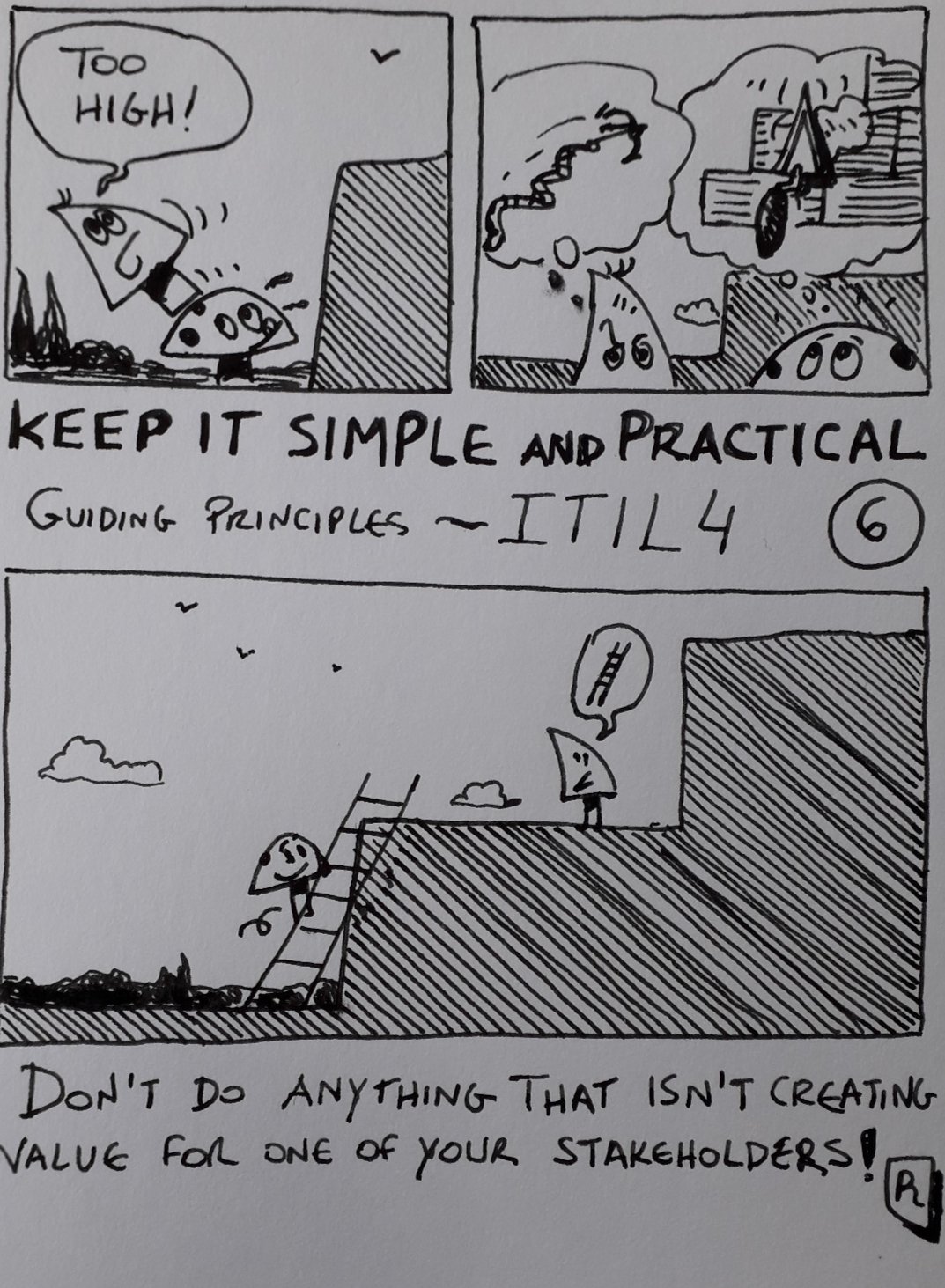
ITIL 4 – Think and Work Holistically
April 12, 2019
Ten things changed in ITIL 4 (for those who know ITIL v3/ITIL 2011 edition)
April 12, 2019This list is arbitrary. There are more changes (like the introduction of practices like project management or workforce and talent management).
The list then:
- BRM is now RM – to manage all relations with stakeholders, not just with the customers
- IT Asset Management is now separated from Configuration Management (likewise, Release Management is also separated from Deployment Management)
- Change Management is now Change Control (beneath it stays the same)
- Organizational Change Management (OCM) is now a practice (more vivid since ITIL practitioner)
- CSI Register is now Continual Improvement Register (CIR)
- Service lifecycle is gone. Look at Service Value System and Service Value chain activities instead. The service value chain activities are always present in the practices (it’s clear how practices contribute value unlike before with processes for the service lifecycle)
- Four dimensions (not unlike COBIT previous enablers, draw from the People, Process, and Products, and from Service Design’s 5 aspects) are always considered for complete service management
- Guiding principles (reviewed from ITIL practitioner) give explicit guidance (you can check short cartoons on these on previous posts)
- Processes and functions are now practices. Grouped in general, service management, and technical management. 34 practices. Getting closer to COBIT here too (each practice has activities too)
- Incident and Known Error definitions are simpler, non-ambiguous (yes!)
ITIL 4 – Collaborate and Promote Visibility
March 20, 2019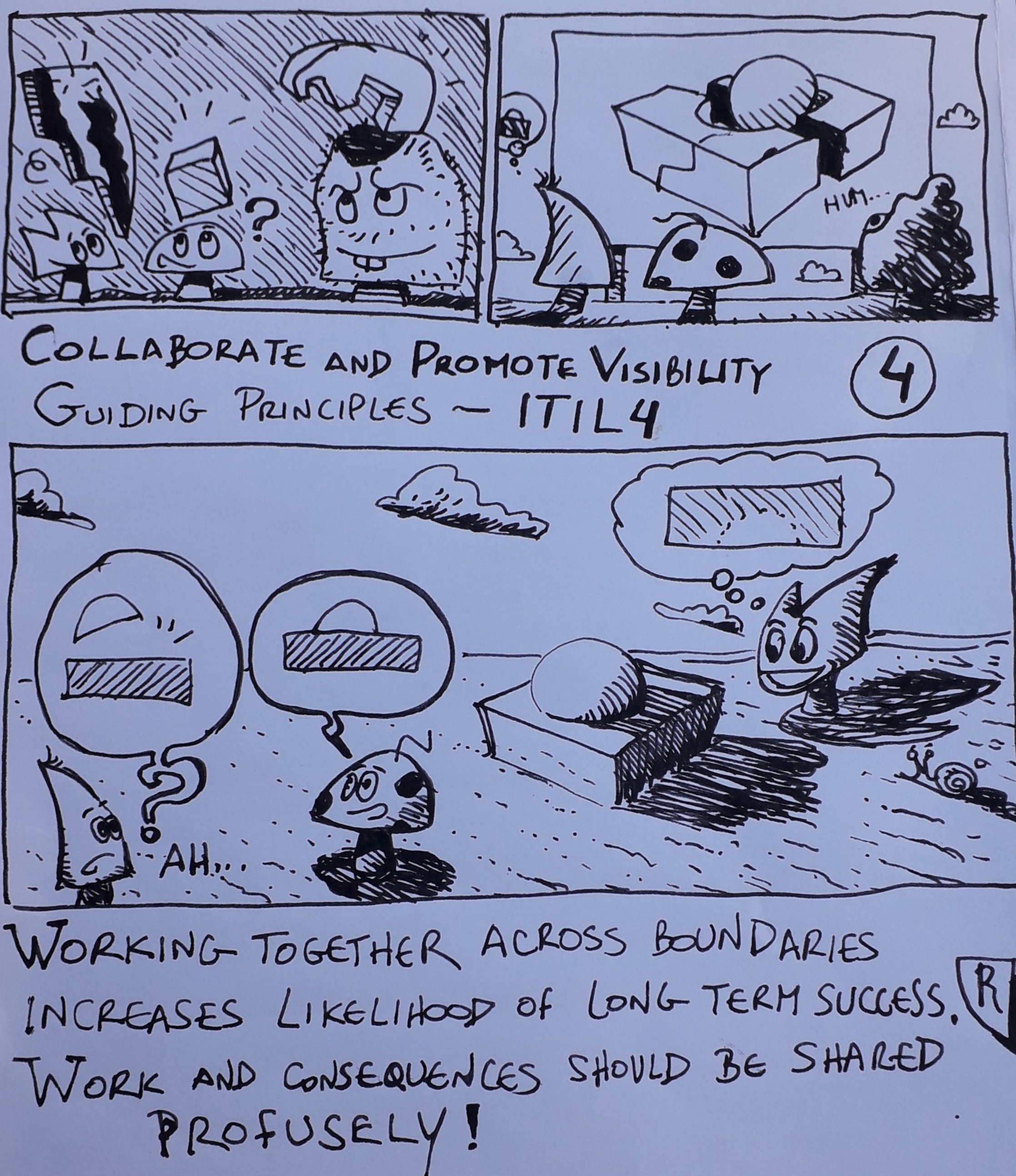
ITIL 4 – Progress iteratively with feedback
March 18, 2019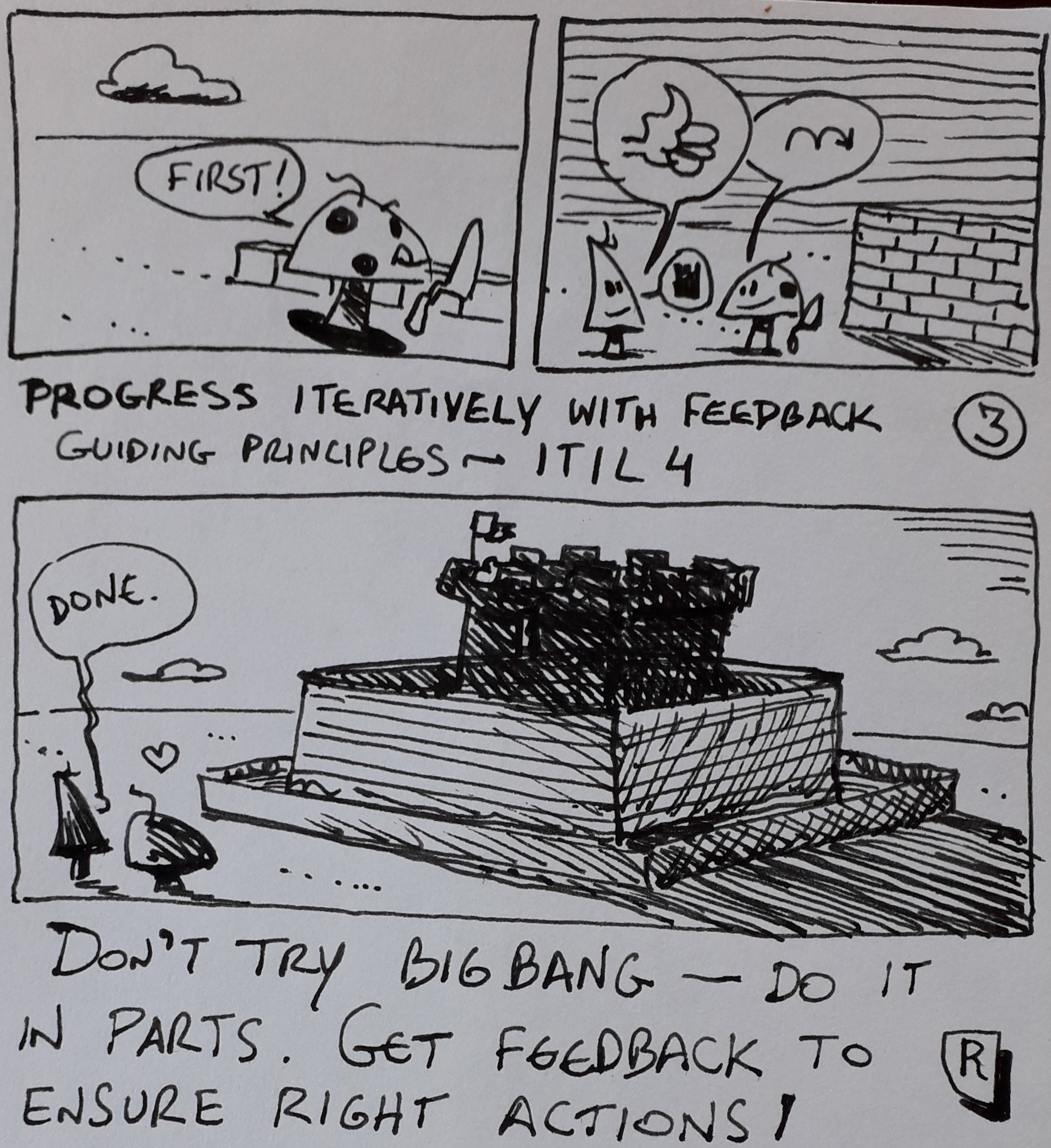
ITIL 4 – Start where you are guiding principle
March 13, 2019
ITIL 4 – Focus on Value guiding principle
March 12, 2019
Cyberdemocracy
January 31, 2019This week I went to an event aptly dedicated to “Cyberdefense and cybersecurity”. These topics are fashionable and for good reasons.
The cyber suffix is more and more a reality and needs to enter our lexicon fast. Otherwise, we will soon be swept over by a world under a not so bright new order.
Beyond the obvious fears and calls to action, I captured these, starting from the one I think we all can do something about it:
- Education – Surprise! Everyone, and especially the youth, as to step up on their awareness for the cultural and democracy shift brought by the post-Internet world. I place my bet here for informed people are wiser. Here’s one free online introductory course. Cybersecurity education resources can be found too.
- Regulation – A need for a net of cooperation institutions from all sectors to bring order to the new wild west. Or face being ruled by big corporations as nations sovereignty keep declining. There’s hope from the UK. Also, an informative report from ENISA.
- Artificial Intelligence – Like other disrupting technologies, it did not bother knocking first before entering our lives. Really fast. It is already being used for cyberattacks.
Motivational Passphrase – the quest for a better password
September 8, 2018Use longer passwords. With 15 characters and avoiding obvious words you’ll be quite safe.
Use an easy way to recall your passwords. Use motivational passphrases. Read the rest of this entry »


 ITIL Blues